Learn the difference between engine and transmission problems, common warning signs, repair costs, and when to replace your vehicle’s drivetrain components. Find tested used engines and transmissions at Stark Engines.
Engine vs Transmission Problems: How to Identify the Warning Signs Before Your Car Breaks Down
Most drivers don’t think about their engine or transmission until something goes wrong.
A strange knocking sound, delayed shifting, smoke coming from the exhaust, or red fluid leaking underneath your vehicle may seem minor at first — but these are often early warning signs of major drivetrain problems.
Understanding whether the issue is related to your engine or transmission can help you:
- Avoid expensive repairs
- Prevent total vehicle breakdown
- Improve vehicle lifespan
- Save money on replacement costs
- Get your vehicle repaired faster
At Stark Engines, drivers across the USA can find high-quality tested used engines and transmissions for a wide range of makes and models.
This complete guide explains:
- The difference between engine and transmission problems
- Common symptoms of engine failure
- Common symptoms of transmission failure
- What causes these issues
- When replacement makes more sense than repair
- Why used engines and transmissions are becoming increasingly popular
What Is the Difference Between an Engine and a Transmission?
The engine and transmission are two of the most important components in any vehicle, but they serve completely different functions.
What Does the Engine Do?
The engine generates power by burning fuel and converting it into mechanical energy.
It is responsible for:
- Producing horsepower
- Generating torque
- Powering the vehicle
- Supporting acceleration and performance
Without the engine, the car cannot move.
What Does the Transmission Do?
The transmission transfers power from the engine to the wheels while controlling gear changes.
It helps the vehicle:
- Accelerate smoothly
- Maintain proper speed
- Improve fuel efficiency
- Handle different driving conditions
Without a functioning transmission, the engine’s power cannot properly reach the wheels.
Common Signs of Engine Problems
Recognizing engine warning signs early can prevent catastrophic damage and expensive repairs.
1. Knocking or Ticking Noises From the Engine
One of the most serious engine symptoms is knocking sounds coming from under the hood.
Possible Causes of Engine Knocking
- Low oil pressure
- Worn engine bearings
- Damaged pistons
- Incorrect fuel combustion
- Internal engine wear
Ignoring knocking noises can eventually lead to complete engine failure.
2. White or Blue Exhaust Smoke
Exhaust smoke is a major indicator of engine health.
Blue Smoke From Exhaust
Blue smoke usually means the engine is burning oil internally.
Possible causes include:
- Worn piston rings
- Valve seal leaks
- Turbocharger issues
White Smoke From Exhaust
White smoke may indicate:
- Coolant leaks
- Blown head gasket
- Cracked engine block
According to AAA Auto Repair Tips, unusual exhaust smoke should always be inspected immediately.
3. Excessive Oil Consumption
If your car constantly burns through oil, internal engine components may already be wearing out.
Symptoms of Oil Burning
- Burning oil smell
- Frequent oil top-offs
- Poor fuel economy
- Reduced engine performance
Low oil levels can rapidly damage internal engine components.
4. Engine Overheating
An overheating engine can destroy major components within minutes.
Common Causes of Overheating
- Low coolant
- Radiator failure
- Broken water pump
- Cooling fan issues
- Head gasket leaks
Overheating is one of the leading causes of engine replacement.
5. Loss of Engine Power
A failing engine often struggles to generate consistent power.
Common Symptoms
- Rough idle
- Misfires
- Weak acceleration
- Vibrations
- Difficulty starting
These issues typically worsen over time if ignored.
Common Signs of Transmission Problems
Transmission issues often affect how the vehicle shifts and drives.
1. Slipping Gears
Gear slipping is one of the most common signs of transmission failure.
Symptoms of Slipping Gears
- Sudden RPM spikes
- Weak acceleration
- Unexpected gear changes
- Loss of power while driving
Driving with slipping gears can become dangerous quickly.
2. Delayed or Hard Shifting
A healthy transmission should shift smoothly.
Warning Signs
- Delayed gear engagement
- Jerking while shifting
- Hard shifting
- Clunking noises
These symptoms may indicate internal transmission wear or low fluid pressure.
3. Red Transmission Fluid Leaks
Transmission fluid is usually bright red or dark pink.
Causes of Transmission Leaks
- Damaged seals
- Cracked transmission pan
- Worn fluid lines
- Gasket failure
Low transmission fluid can rapidly lead to complete transmission failure.
4. Burning Smell From the Transmission
Burning transmission fluid usually indicates overheating.
Possible Reasons
- Internal friction
- Low transmission fluid
- Overheating components
- Slipping clutches
Overheated fluid loses its protective properties and increases wear.
5. Vibrations or Grinding While Driving
Transmission damage often causes:
- Grinding noises
- Shaking
- Vibrations
- Shuddering during acceleration
These symptoms typically indicate internal gear or clutch damage.
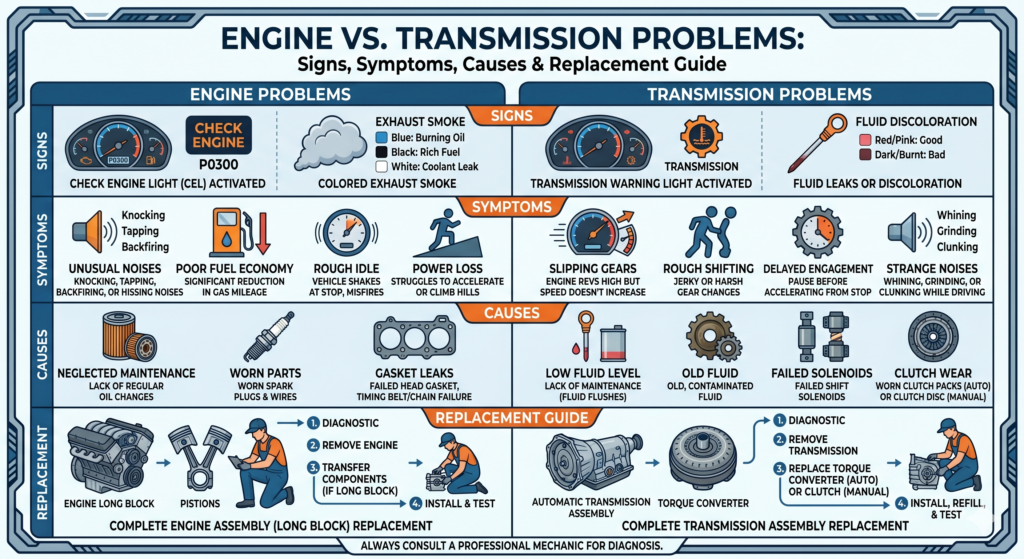
Engine Problems vs Transmission Problems: Key Differences
Many drivers confuse engine issues with transmission problems because some symptoms overlap.
Here’s a quick comparison:
| Engine Problems | Transmission Problems |
|---|---|
| Knocking noises | Slipping gears |
| Exhaust smoke | Delayed shifting |
| Oil burning | Red fluid leaks |
| Misfires | Hard shifting |
| Overheating | Gear engagement problems |
| Weak acceleration | RPM spikes |
Simple Rule to Remember
- If the vehicle struggles to produce power, the issue is likely engine-related.
- If the vehicle struggles to transfer power, the transmission is likely failing.
What Causes Engine Failure?
Several factors can damage an engine over time.
Common Causes of Engine Failure
- Lack of oil changes
- Overheating
- Poor maintenance
- Internal wear
- Coolant leaks
- Timing component failure
- Driving with low oil pressure
Routine maintenance significantly reduces the risk of major engine damage.
What Causes Transmission Failure?
Transmission systems are extremely complex and rely heavily on clean fluid and proper pressure.
Common Causes of Transmission Failure
- Low transmission fluid
- Fluid contamination
- Overheating
- Aggressive driving
- Ignoring warning signs
- Internal clutch wear
Transmission repairs become more expensive the longer problems are ignored.
Repair vs Replacement: Which Is Better?
In some situations, repairs may solve the issue temporarily.
However, replacement often becomes the better option when:
- Repair costs become too high
- Internal damage is severe
- The vehicle has high mileage
- Multiple components are failing
- Reliability becomes a concern
Replacing a damaged engine or transmission can often be more cost-effective long-term.
Benefits of Buying Used Engines and Transmissions
Brand-new powertrain components can be extremely expensive.
That’s why many drivers now choose tested used engines and transmissions instead.
Advantages of Used Engines
- Lower replacement cost
- OEM compatibility
- Faster availability
- Cost-effective repairs
Advantages of Used Transmissions
- More affordable than rebuilding
- Tested for performance
- Widely available for multiple models
- Faster turnaround times
At Stark Engines, customers can find quality-inspected replacement parts shipped across the USA.
You can also explore additional inventory resources through:
How to Choose the Right Used Engine or Transmission
Before purchasing a used drivetrain component, always verify:
- Mileage information
- Compatibility with your vehicle
- Warranty options
- Inspection procedures
- Testing standards
- Shipping support
Working with a reliable supplier helps reduce future risks.
How to Prevent Engine and Transmission Problems
Preventive maintenance is the best way to avoid expensive breakdowns.
Engine Maintenance Tips
- Change oil regularly
- Monitor coolant levels
- Replace filters
- Address warning lights immediately
- Avoid overheating
Transmission Maintenance Tips
- Check fluid levels regularly
- Replace transmission fluid on schedule
- Fix leaks immediately
- Avoid aggressive driving habits
- Pay attention to shifting behavior
Routine maintenance can dramatically extend vehicle lifespan.
Why Choose Stark Engines?
Stark Engines supplies tested used engines and transmissions for customers throughout the USA.
What Stark Engines Offers
- Quality-tested used engines
- Verified used transmissions
- Fast nationwide shipping
- Multiple makes and models
- Reliable customer support
- Affordable replacement options
Whether you’re a mechanic, dealership, repair shop, or individual vehicle owner, Stark Engines helps simplify the replacement process.
Final Thoughts on Engine vs Transmission Problems
Your vehicle usually gives warning signs before a complete breakdown happens.
Knocking noises, slipping gears, exhaust smoke, delayed shifting, overheating, or red fluid leaks should never be ignored.
Understanding the difference between engine problems and transmission problems can help you:
- Diagnose issues earlier
- Reduce repair costs
- Improve vehicle reliability
- Prevent roadside breakdowns
And when replacement becomes necessary, choosing a trusted supplier matters.
Stark Engines helps drivers across the USA find tested, quality-inspected used engines and transmissions shipped quickly and reliably.
Call (888) 742-3067 today to check inventory and get your vehicle back on the road fast.